Screen recording / Practical guide
Employee Screen Recording Software That Delivers
Plan screen capture, find the relevant playback window, and preserve the recording needed to explain an incident.
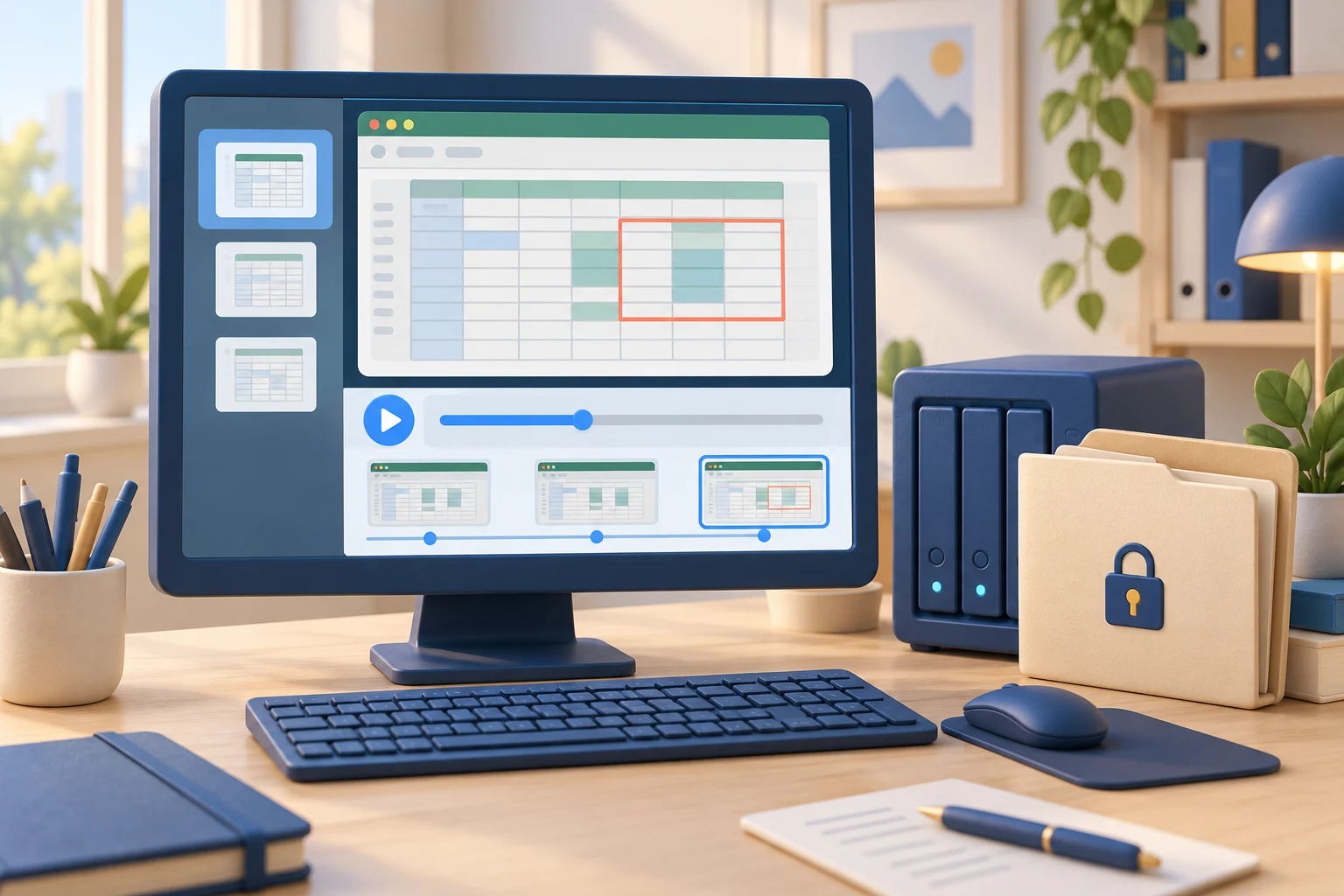
A customer reports an incorrect change after the employee has closed the application. Employee screen recording software can preserve the desktop sequence for later review, if recording was enabled at the time. The priority is useful playback: the right computer, the right interval, readable detail, and an archive authorized reviewers can retrieve.
For small and midsize businesses, that distinction matters. You do not need more vague activity scores or a weekly promise that work is on track. You need to see what happened on company devices, investigate exceptions quickly, and take action before lost productivity or risky behavior becomes a larger operational cost.
01Capture and retrieve useful employee screen recordings
Screen recording is not simply a video capture feature. In a business setting, it is a way to preserve desktop activity for productivity review, security investigations, training verification, and policy enforcement. The useful question is not whether a system can record a screen. Most can. The question is whether the recordings provide enough context to support a decision.
Test the recording configuration on a known task before relying on it. Capture a short sample, retrieve it, and confirm that text and application changes are readable. Check timestamps and the selected desktop. An unreadable recording or a gap in capture cannot be repaired by increasing retention later.
Desktop recording is strongest when it works alongside web history, application usage, process logging, and keystroke records. A recording may show that a file was copied or an unusual website was opened. Application and process logs can identify the program involved, while time-based reports establish how often the behavior occurred. Together, these records reduce guesswork.
Audio recording may also be appropriate for selected roles and company-owned workstations, particularly where internal policy, consent requirements, and business need support it. It should not be enabled casually. Recording scope needs to match the risk being managed.
02Why Managers Need Screen Evidence, Not Just Activity Scores
An activity score can flag a problem, but it cannot explain it. A user may show low keyboard or mouse activity because they are reading a technical document, participating in an approved call, waiting on a system, or simply disengaged. Screen recordings provide the missing context.
That context changes the quality of management conversations. Instead of saying, “Your activity looked low last Tuesday,” a manager can identify a specific pattern: repeated personal browsing during scheduled work time, long periods in an unapproved tool, or a workflow that is taking far longer than it should. The first situation calls for accountability. The second may require a policy control. The third could reveal a training or process failure.
Screen recording also protects employees when an accusation is wrong. A complete record can show that someone was working in a legitimate business application, resolving a customer issue, or following an approved procedure that was not visible in a simple time report. Oversight works best when it is based on verifiable facts rather than suspicion.
For remote and hybrid teams, this is especially valuable. Managers cannot rely on casual floor visibility, and IT cannot assume every device is operating within policy just because it connects to company systems. Recording establishes a reviewable trail across locations.
03Use Recording With Active Controls
Recording after the fact is necessary, but it is not enough when a known risk is already occurring. If employees repeatedly visit distracting sites, run unauthorized software, connect restricted devices, or transfer sensitive files outside approved channels, the business needs preventive controls as well as evidence.
This is where an administrator-oriented platform has a clear advantage. Net Monitor for Employees Pro pairs screen recording and activity logging with controls that let IT block websites and applications, restrict devices, manage files remotely, execute commands, restart or shut down computers, and share desktops when support is needed. Managers gain visibility; administrators retain the ability to intervene.
The right response depends on the situation. Blocking social media across every device may be reasonable in a tightly controlled environment, but it may interfere with legitimate marketing or customer-service work. A better policy may use department-specific controls, documented exceptions, and reports that identify repeat abuse. Control should be deliberate, not blunt.
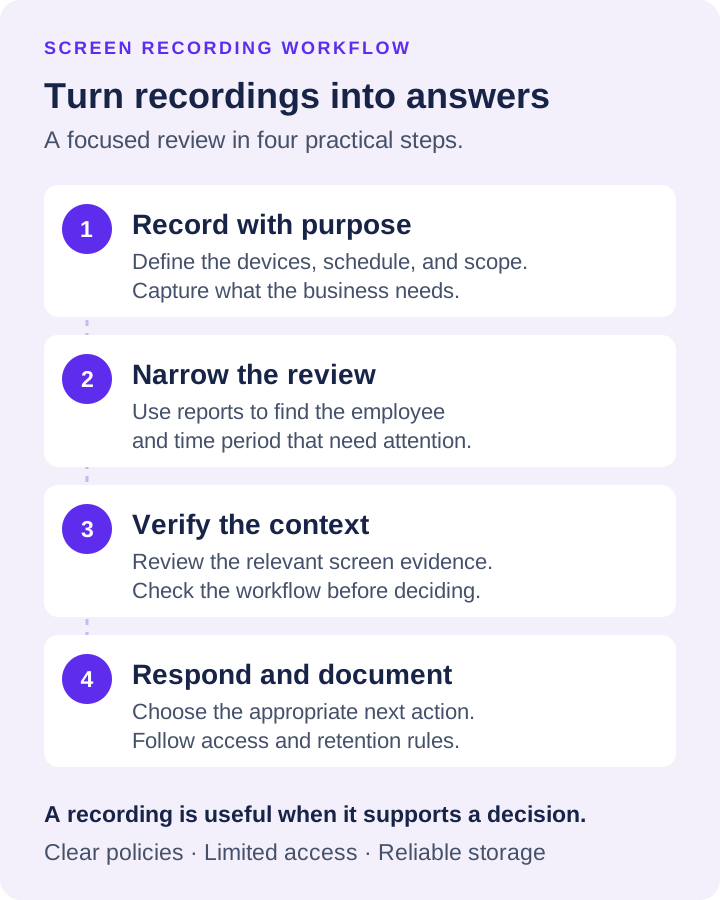
When an incident is reported, narrow the interval with activity reports, then review the recording before and after the relevant action. Preserve the original file and document the computer, time range, source location, and reviewer. A visible action can add context; the recording alone does not prove that a transfer completed or establish intent.
04Build a Recording Policy Before Deployment
Screen recording has legitimate business uses, but it also requires clear governance. A company that installs monitoring software without defined rules creates avoidable employee-relations and legal risk. The goal is to protect company operations, not to create uncontrolled surveillance archives.
Start with a written policy that explains which company devices are monitored, what information is collected, why it is collected, who may access it, and how long it is retained. Employees should receive notice according to applicable federal, state, and local requirements. Multi-state employers should have counsel review their approach, particularly when audio recording, personal devices, unionized workforces, or more restrictive state privacy rules are involved.
Access should be limited by role. A department manager may need productivity reports and selected recordings for their own team. IT may need broader access during an incident. Not every supervisor needs unrestricted access to all employee activity. Restricting access helps maintain confidentiality and limits misuse.
Retention also deserves a real decision. Keeping every recording indefinitely raises storage cost and exposes the business to unnecessary data risk. Shorter retention may be appropriate for routine productivity records, while incident-related footage can be preserved under a documented hold. Your retention period should reflect operational need, storage capacity, internal policy, and any compliance obligations.
05Storage Determines Whether Recordings Remain Useful
Recording is only valuable if evidence remains available when you need it. Local-only storage can be simple for a small office, but it becomes fragile when devices fail, employees work remotely, or administrators need centralized access. Distributed teams need a storage plan that does not depend on one workstation remaining online and intact.
Choose software that supports the storage methods your organization can manage. Centralized recording repositories give IT a consistent place to retrieve evidence and apply retention rules. Cloud-compatible storage can support remote endpoints and reduce dependence on office infrastructure, provided permissions, encryption, and access controls are configured correctly.
Net Monitor for Employees Pro supports recording storage through SMB, FTP, SFTP, WebDAV, Amazon S3-compatible storage, Google Cloud Storage, and Azure Blob Storage. That flexibility matters because a five-person office and a 200-person hybrid business may have very different infrastructure, budgets, and administrative capabilities.
Do not treat cloud storage as automatic security. Use dedicated credentials, least-privilege permissions, protected administrator accounts, and a process for reviewing who can retrieve or delete recordings. Test restoration and playback as well. A recording archive that cannot be searched, accessed, or played during an investigation is just an expensive collection of files.
06How to Roll Out Employee Screen Recording Software
A controlled rollout produces better results than installing agents everywhere and reviewing random footage. Begin with the business problem you are trying to solve. It may be time theft in a remote department, repeated use of prohibited applications, visibility into a sensitive workflow, or investigation support for insider-risk events.
Deploy first to a defined group of company-owned devices. Set recording schedules, choose the data categories that matter, and establish storage and retention settings. Then verify that reports and recordings answer the questions managers actually ask. If a manager cannot find evidence of non-work browsing, excessive idle time, or an unauthorized application within minutes, the configuration needs adjustment.
Use the first weeks to set a baseline. Some teams will have work patterns that look unusual but are entirely legitimate. Designers, analysts, support staff, and developers may spend long intervals reading, testing, or waiting for systems. Review role-specific expectations before labeling behavior unproductive.
Finally, create an escalation path. Define who reviews alerts, who approves access to recordings, when HR is involved, and when IT should apply technical controls. This prevents inconsistent enforcement and ensures evidence is handled responsibly.
07Make Oversight Produce Action
Employee screen recording should not turn managers into full-time video reviewers. The objective is to find exceptions, verify facts, and correct problems quickly. Use reports to narrow the time period and user, then use recordings to confirm what occurred. When a pattern is confirmed, respond with the appropriate measure: coaching, training, a policy reminder, access restriction, application blocking, or a formal investigation.
The strongest monitoring program is visible, documented, and tied to business operations. Employees should understand that company devices are managed, work activity may be reviewed, and security rules are enforceable. That clarity discourages misuse while giving responsible employees a consistent standard.
Download the free trial and test employee screen recording software against a real operational question in your environment. The useful result is not more footage. It is faster answers, enforceable controls, and a clearer record when your business needs to act.