Live screen monitoring / Practical guide
Live Employee Screen Monitoring for Better Control
Verify the current screen state, identify the immediate obstacle, and hand off to support while the issue is visible.
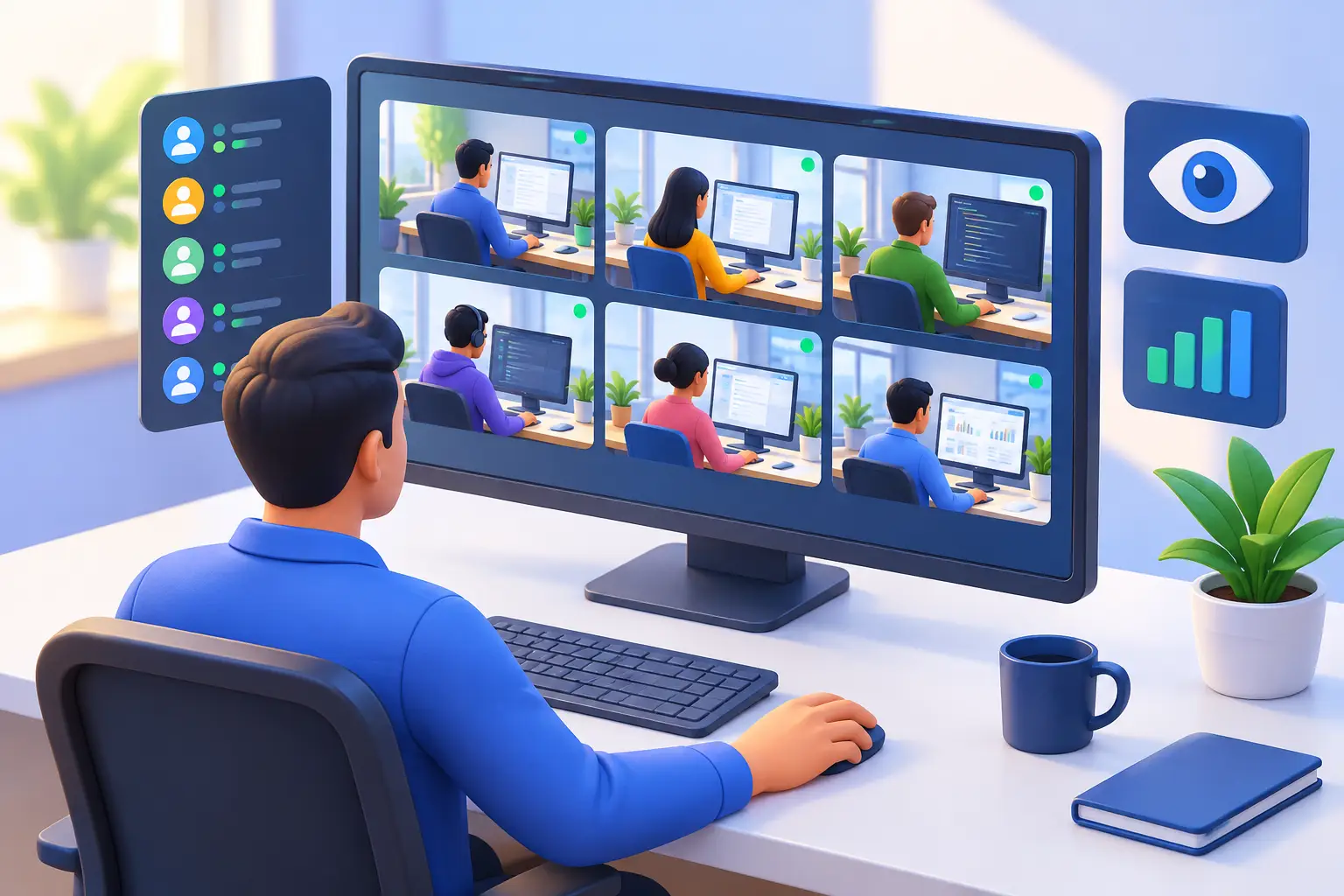
Live employee screen monitoring is useful when the answer cannot wait for a historical report. An employee is blocked at a payment screen, a new hire cannot complete a task, or an administrator needs to verify an unexpected window. A current desktop view helps identify what is happening and choose the next action.
For small and midsize businesses, the practical value is simple: see the work, identify the problem, and take the appropriate action from one administrative console. Used with clear policies and a defined purpose, live monitoring turns scattered endpoint activity into evidence managers can act on.
01What a live employee screen view can confirm
Live screen viewing displays the current desktop of selected company devices in real time. An administrator can view one screen for focused troubleshooting or multiple screens at once to supervise a department, training room, or remote team. Instead of relying on self-reported status, managers can confirm whether work is progressing, whether required software is being used, and whether a user is stuck.
Screen visibility is most useful when it works alongside activity records. A static screenshot may show an employee on an approved application, but it does not explain what happened over the previous hour. Desktop recording, website history, application and process logs, keystroke records, and filtered reports provide the surrounding context. Together, these records help distinguish a genuine workflow issue from persistent distraction, unauthorized activity, or an attempt to bypass policy.
The goal is not to watch every user every minute. That wastes management time and creates more data than anyone can review. The goal is to give authorized personnel the ability to verify activity quickly when productivity, security, or accountability requires it.
02When Real-Time Screen Visibility Is Worth Using
The strongest use cases are operational, not theoretical. A department manager may notice repeated delays in processing customer requests. Live viewing can reveal whether employees are waiting on a slow business application, following an inefficient manual process, or spending time on unrelated websites. Each cause needs a different response.
IT teams benefit when users report vague problems such as “the system is frozen” or “the file disappeared.” With a live view, the technician can see the error message, the application state, and the user’s workflow without turning a basic support request into a long remote call. If permitted by company policy, remote administration tools can then help resolve the problem through desktop sharing, file transfer, command execution, or a controlled restart.
Security teams use live monitoring differently. A sudden upload to an unapproved service, an attempt to run unauthorized software, or unusual access to sensitive records can be reviewed immediately. That does not mean every alert proves malicious intent. It means the company has a way to investigate before the issue becomes a data loss event.
Live visibility is also valuable during onboarding and training. Supervisors can confirm that new hires can access the required systems and follow the expected process. When employees work from home, travel between client sites, or use off-network company laptops, cloud-based monitoring can preserve that same management visibility.
03Live Employee Screen Monitoring Needs Clear Rules
Monitoring technology is effective only when the business defines how it will be used. Company-owned equipment, written acceptable-use rules, authorized administrators, and a documented business purpose should come first. Requirements vary by state, industry, collective bargaining agreement, and the locations where employees work, so businesses should obtain appropriate legal and HR guidance before deployment.
A workable policy explains that company systems may be monitored, identifies the types of activity that may be collected, and tells employees who can access the records. It should also define when monitoring data is reviewed and how long recordings and logs are retained. Vague rules invite disputes. Specific rules protect the business and set expectations for the workforce.
Access control matters just as much. Not every manager needs the ability to view every screen, read every log, or retrieve every recording. Limit authority by role, require strong administrator credentials, and retain an audit trail of administrative actions. Monitoring data can contain sensitive business information, so it must be treated as protected operational evidence rather than casual management material.
04Build Monitoring Around Action, Not Observation
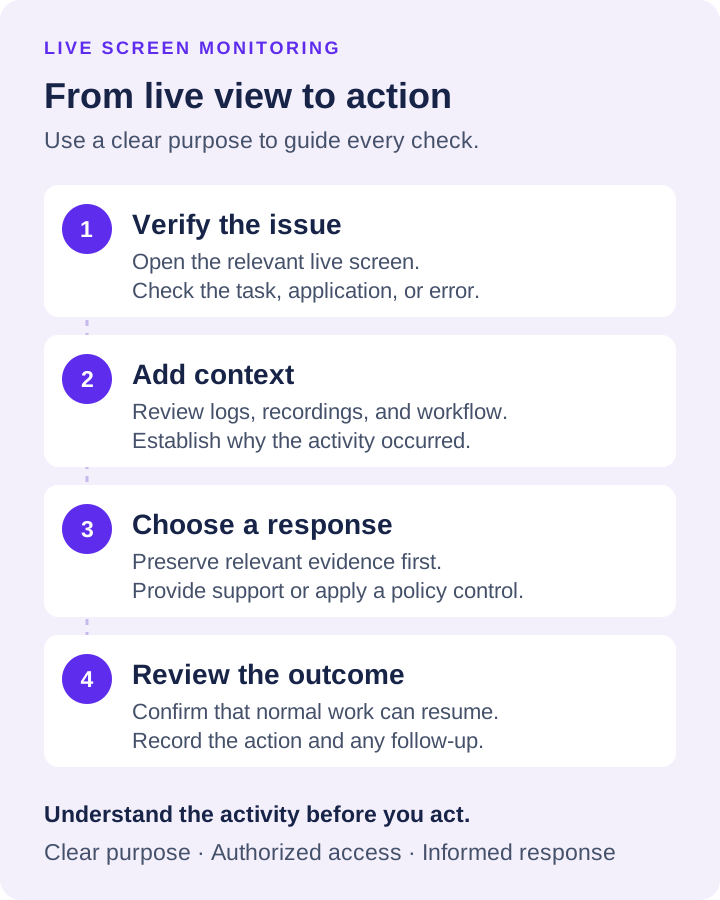
Begin a live check by confirming the selected computer and user. Ask which task is blocked, open the relevant screen, and check that the image is updating. A frozen preview is not evidence that the employee is inactive. Use the screen-view controls, including Refresh, when you need to request a new frame.
Read the error or application state before taking control. If remote assistance is needed, coordinate with the employee and follow the support procedure. Record the resolution in the ticket. Live viewing answers what is visible now; use the screen recording guide when you need to reconstruct an earlier event.
Then pair visibility with an appropriate response. If a website repeatedly disrupts work, block it on managed devices. If a prohibited application appears, restrict the application and investigate how it was installed. If a user is struggling with a required task, provide training or technical support. If evidence points to an insider threat or policy breach, preserve the relevant recordings and logs before changing the endpoint.
This approach keeps live monitoring tied to productivity, security, and cost control. It also prevents the common mistake of treating all unexpected activity as misconduct. An employee switching between applications may be completing a legitimate task. A long idle period may reflect a meeting, a system outage, or a break allowed by policy. Managers need context before they make decisions.
05Combine Screen Views With Endpoint Control
Screen monitoring is more valuable when it is part of endpoint administration. Visibility tells an administrator what is occurring. Control functions let that administrator reduce the risk or restore operations without waiting for physical access to the device.
A practical platform should allow authorized administrators to block websites and applications, manage files remotely, restrict removable devices, control computer power, share a desktop, and execute approved commands. These capabilities matter most when endpoints are outside the office. A laptop used by a traveling employee can still require the same policy enforcement as a desktop on the corporate network.
Recording storage also deserves attention. Businesses need enough capacity to preserve evidence, but they should not keep every recording forever. Set retention periods based on risk, available storage, and internal requirements. Support for local storage and business storage services such as SMB, FTP, SFTP, WebDAV, Amazon S3-compatible storage, Google Cloud Storage, and Azure Blob Storage gives IT teams options for matching storage to their environment.
Before rolling out the system broadly, test it with a small group of devices. Verify that screen views are useful at the selected display settings, recordings play back correctly, reports identify the information managers need, and endpoint controls do not interfere with required work. A pilot also exposes permission gaps and policy language that needs revision.
06Turn Evidence Into Better Management
The best monitoring records are specific enough to support a decision. A manager should be able to filter activity by employee, date range, website, application, process, or keyword and quickly see whether a concern is isolated or recurring. Reports should reduce investigation time, not create a stack of material that nobody reviews.
For example, a recurring productivity concern may be addressed through a focused report showing non-work web activity during scheduled hours. An IT investigation may require a desktop recording combined with process logs to establish when unauthorized software ran. A security event may require preserving activity records before a device is remediated. The evidence required depends on the incident, which is why flexible filtering and storage are operational necessities.
Net Monitor for Employees Pro supports this model by combining live screen viewing, recording, activity logging, reporting, restrictions, and remote administration in one administrator-focused system. A no-registration trial gives IT and operations teams a practical way to test how monitoring fits their actual devices, workflows, and policies before committing to licenses.
Start with the issue that costs the business the most time or creates the greatest exposure. Configure live visibility around that issue, establish who can act on what they see, and use the resulting evidence to improve the work instead of merely watching it.