Remote administration / Practical guide
Remote Computer Administration Software for SMBs
Plan remote maintenance, transfer files, run approved commands, and verify changes without a desk-side visit.
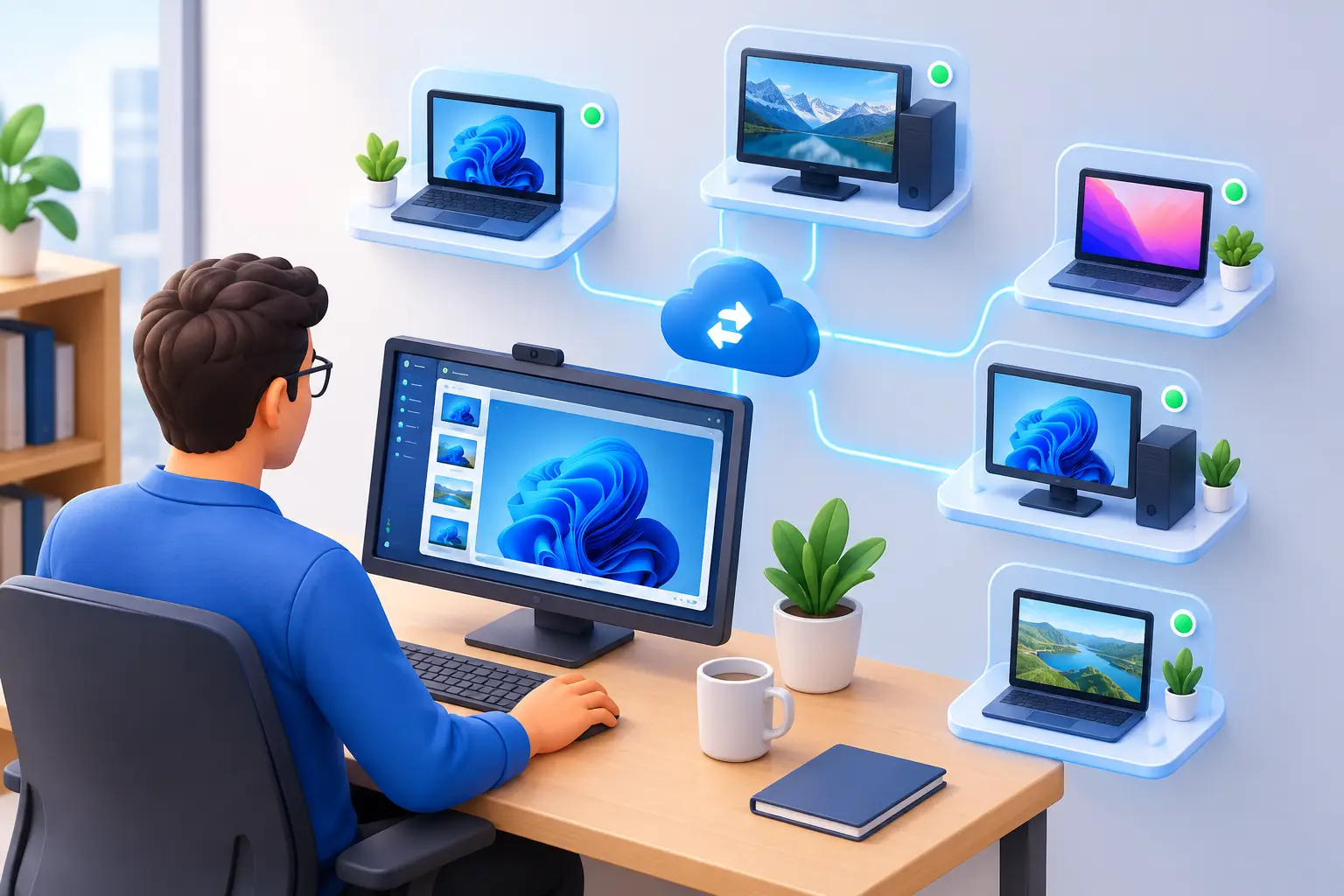
Remote computer administration software gives a small IT team a practical way to maintain computers across offices and homes. The task might be replacing a configuration file, stopping a failed application, or restarting a device after maintenance. Success means verifying the change and restoring the employee's workflow, not merely establishing a connection.
For businesses managing hybrid staff, traveling employees, branch offices, or fully remote teams, the issue is not simply technical support. It is accountability. Managers need to know whether devices are being used for work, whether users are following policy, and whether a problem can be corrected before it becomes downtime, lost data, or a security incident.
01Remote administration tasks an SMB should test
Basic remote-access tools let an IT technician connect to a computer when a user calls for help. That is useful, but it is not enough for organizations responsible for productivity, policy enforcement, and endpoint security. Effective remote computer administration software provides a central view of devices and activity while giving administrators the tools to act immediately.
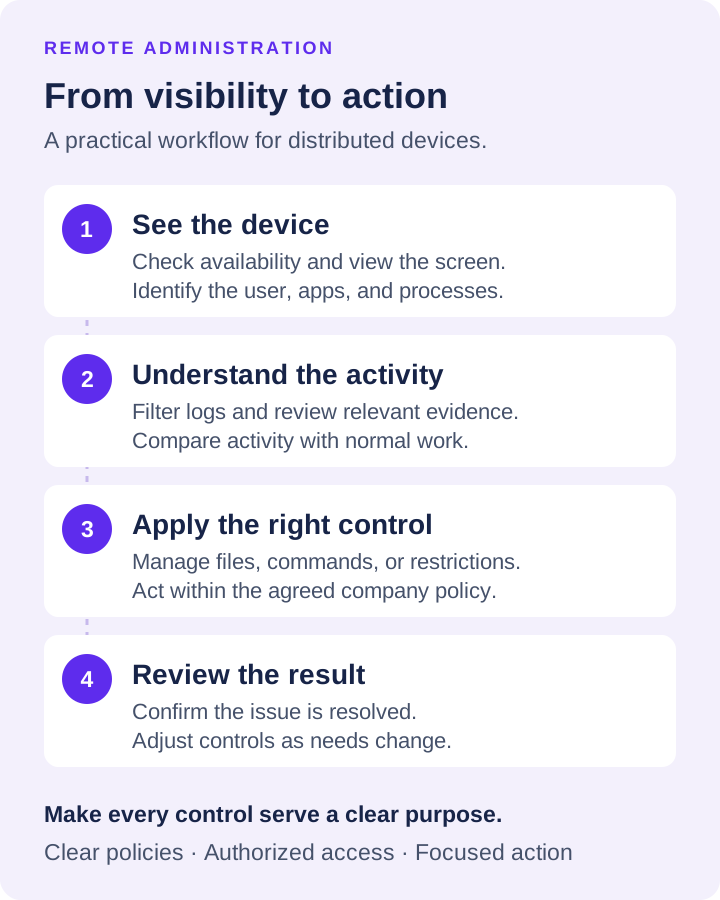
The core requirement is visibility. An administrator should be able to see which computers are online, view a live employee screen when necessary, identify active applications and processes, and review internet use without waiting for an employee to submit a ticket. This helps managers investigate a productivity concern, confirm that required software is running, or identify unusual behavior before it spreads.
Control matters just as much. A platform should allow authorized staff to remotely manage files, execute commands, restart or shut down systems, and restrict websites, applications, devices, or other activity that violates company policy. The goal is not to create more reports for their own sake. The goal is to reduce the time between discovering a problem and correcting it.
02Why Endpoint Visibility Has Become an Operations Issue
Before changing a remote computer, confirm its identity, the employee's availability, and a maintenance window. Record the intended change and keep a recovery copy of any configuration you will replace. Use remote file management to place the approved file in the correct location, then verify the destination before continuing.
Run approved commands on one test endpoint first. Check the result, reconnect after a permitted restart, and confirm that the business application works. A command sent is not proof of a completed repair. Document failures and recovery steps before applying the same change to additional computers.
A centralized administration system creates an evidentiary record. Screen recordings, website history, application use, process logs, keystroke logs, and filtered activity reports can show what occurred on a company-owned endpoint. Used under clearly communicated policies and applicable laws, this information gives managers facts rather than assumptions.
That distinction is significant. A report showing repeated access to blocked websites calls for a different response than a report showing an employee struggling with a required business application. One may require enforcement. The other may reveal a training or process problem. Good administration tools support both decisions.
03Combine Monitoring With Direct Control
Monitoring without the ability to intervene forces administrators into a slow, manual workflow. They identify a problem, contact the employee, wait for a response, and hope the issue is resolved correctly. For a minor issue, that may be acceptable. For unauthorized software, data handling concerns, or a device that needs immediate attention, it wastes time.
A more practical approach combines observation and response in the same administrative console. If an administrator sees an unapproved application running, they can document the activity, restrict the application, and follow up with the employee or manager. If a device is unresponsive, they can send a command, restart it, or shut it down remotely. If a work file must be recovered or transferred, remote file management avoids unnecessary delays.
This is particularly useful for small IT teams. A business with one administrator cannot spend the day moving between disconnected tools for remote support, activity reports, file transfers, web filtering, and power management. Consolidating these functions reduces administrative overhead and makes enforcement more consistent.
Use Live Views Carefully and Purposefully
Live screen viewing is one of the fastest ways to understand what is happening on an endpoint. It can confirm whether a user is working in the assigned system, reveal an error message during support, or show whether a supposedly completed task is actually being performed.
However, continuous live observation is not always necessary or productive. It should be governed by a written employee monitoring policy, role-based permissions, and a clear business purpose. Managers should have access to the information they need, while sensitive administrative access remains restricted to approved personnel. The right system supports managerial authority without creating uncontrolled access to employee data.
Turn Logs Into Actionable Reports
Raw activity data has limited value if it cannot be filtered and reviewed quickly. Administrators and department managers need reports that answer practical questions: Which applications consume the most work time? Which websites are being visited? Which devices show repeated policy violations? When did a specific event occur?
Filtering by employee, device, date range, website, application, or process helps teams isolate the information that matters. This is more useful than relying on a vague productivity score. A detailed report can identify a recurring bottleneck, support a coaching conversation, document a policy breach, or provide an audit trail after an incident.
04Storage and Recording Are Part of the Security Plan
Desktop and audio recordings can be valuable evidence, but they also create data that must be protected. Before deploying endpoint monitoring, determine what should be recorded, how long records should be retained, who can retrieve them, and where they will be stored.
Local storage may be appropriate for a small office with limited recording needs. Businesses with remote teams or a need for centralized retention often benefit from sending recordings to managed storage. Support for SMB, FTP, SFTP, WebDAV, Amazon S3-compatible storage, Google Cloud Storage, and Azure Blob Storage gives IT teams flexibility to use infrastructure that fits their existing controls and budget.
The trade-off is straightforward: more recording and longer retention provide a stronger record, but they increase storage requirements and access-management responsibilities. Record what supports a defined business purpose. Protect it with appropriate permissions and retention rules. Do not treat sensitive employee activity data as an afterthought.
05A Practical Deployment Approach
Start with the devices that create the greatest operational or security exposure: remote laptops, systems handling customer data, shared workstations, or computers used by teams with measurable productivity requirements. Define who will administer the software, what activity will be monitored, and which restrictions will apply.
Then establish a baseline before making broad changes. Review normal application use, standard websites, typical work hours, and legitimate exceptions. This prevents well-intentioned rules from blocking a business-critical tool or interrupting a valid workflow.
After the baseline is clear, apply controls in stages. Restrict clearly non-business websites and unauthorized applications first. Use reports to identify repeated exceptions, then decide whether they require a policy update, a manager conversation, additional training, or stronger enforcement. Remote administration is most effective when controls are specific, documented, and applied consistently.
Net Monitor for Employees Pro brings these functions together for organizations that need live screen viewing, recordings, activity logs, reports, website and application restrictions, file management, power controls, and remote commands from one administration platform. A fully functional trial gives IT and operations leaders a chance to test the workflow on real company devices before committing to licenses.
06Choose Control That Fits the Actual Risk
The best deployment is not necessarily the one with the most surveillance settings enabled. It is the one that gives your business enough visibility to protect assets, verify work, resolve endpoint problems, and enforce clear policies without burying administrators in unnecessary data.
Start with a defined problem: unproductive web use, unapproved software, weak remote support, missing audit records, or poor control over company devices. Configure the administration system to address that problem directly, measure the result, and adjust as your team and risk level change. That is how remote administration becomes a daily operational control rather than another tool that sits unused.